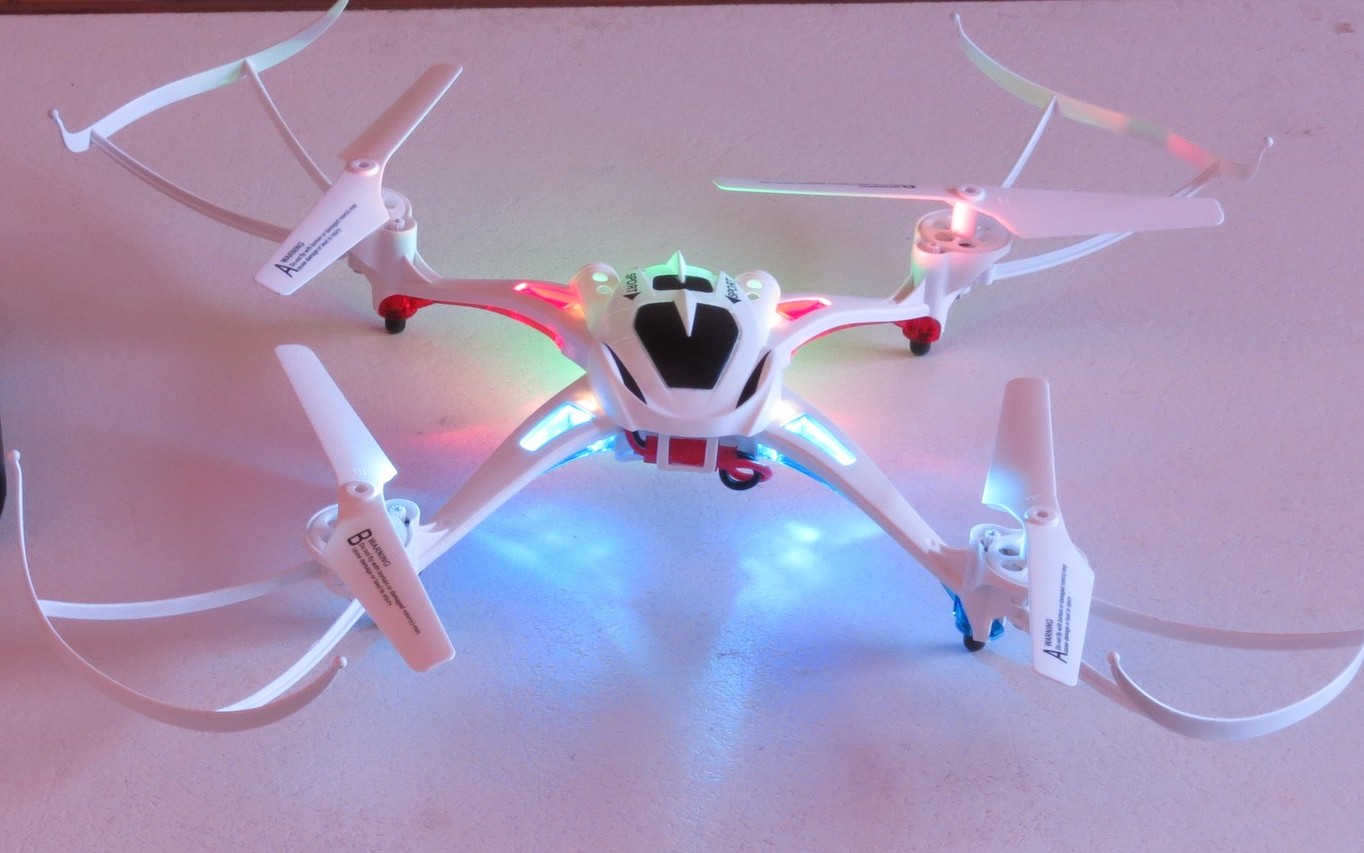
Drone laws are being enacted by state and cities bodies without regard to the fact that the Federal Aeronautics Administration’s (FAA) rules are the ones that govern our airspace. For the most part when people hear the word drone they immediately think of the ones that are used by our armed forces and not the little hobby/toy type. The typical hobby/toy drone is well under the weight limit imposed by the FAA, if it is under 0.55 pounds or 250 grams you do not have to register with FAA.
While it is true that a small drone can carry a camera, video and/or still, the main purpose is to take innocent landscape scenes and not to invade someone’s privacy. Plus many of these drone shots are taken blindly as there is no way to view what the camera is seeing. And yes there are some Wi-Fi and via other transmission methods that do allow for the operator to see what the camera seeing, but you must understand that they are not very good and have a lot of jello effects (the video bounces around) due to the vibrations inherent in the operation of most hobby/toy drones. You must understand that drones that are in the higher end of the price range do not have these problems, but they are not what most people are buying. Plus they weigh enough that they have to be registered with the FAA which means that have to have the registration number issued by the FAA on the drone itself, so if it crashes its owner can be identified. There is no hiding who owns the bigger drones and thus I do not think that people would be so stupid to take voyeuristic type pictures/videos.
Stephen Martinko, a former transportation staff member in Congress, said that the FAA’s authority over airspace safety “still leaves a lot of room for states to act, and they have.” But if you let states control their own airspace then “it gets very complicated and very confusing.” He of course is referring to the FAA drone rules and he is quite right, for if a state law conflicts with a FAA rule which do you obey? Well that should be an easy answer, the FAA and not the state for the FAA’s authority over airspace is unquestioned for safety issues such as keeping drones lower than 400 feet or away from airports these rules can not be challenged by local governments. You have to remember that the FAA is the guardian of our airspace and federal law overrules any state or local law automatically.
For example the state of Connecticut legislator is considering a law to prevent anyone from arming their drone with a weapon and before you say that it can not be done a man fired a gun from his drone and made a YouTube video of it. The police after investigating found that he had not broken any laws. So the legislator is in the process of creating a law prohibiting the firing of a weapon from a drone with an exception for the police. Well the problem again that this is not something for the state of Connecticut, but for the FAA. There is a federal rule, 18 U.S. Code § 32, which prescribes up to 20 years in prison for anyone who willfully “sets fire to, damages, destroys, disables, or wrecks” an aircraft in flight. In other words the police can not shoot down a drone; if they do they will have broken federal law.
Of course there are wide gaps in the rules and regulations that govern drone usage, but if we let the states/local authorities make laws/rules of their own then there will be chaos. It will be like an old Marx brothers movie and who in real life wants that!
That is my opinion- Jumpin Jersey Mike


